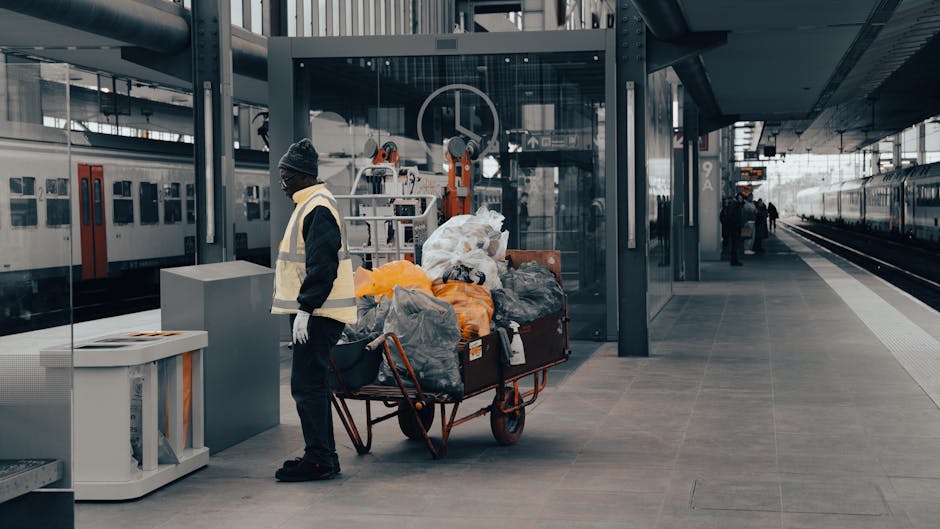
How Dalston Junction Rubbish Collection Works Near the Station
If you have ever tried to move rubbish near Dalston Junction Station, you will know it is not always a simple "load it and go" job. Pavements can be busy, access can be tight, and timings matter more than people expect. In practice, How Dalston Junction Rubbish Collection Works Near the Station comes down to a mix of access planning, the right vehicle, careful loading, and a clear understanding of what can be taken away safely and legally.
This guide explains the whole process in plain English. You will see how collections are usually arranged, what makes station-area rubbish removal different, which jobs it suits best, and how to avoid the common mistakes that lead to delays or extra costs. If you are clearing a flat, office, shop unit, or a pile of mixed waste after a move, this should help you make a better decision without the guesswork. Let's face it, nobody wants to stand around a station forecourt with bags of rubbish and no plan.
Table of Contents
- Why this matters near Dalston Junction
- How the collection process works
- Key benefits and practical advantages
- Who needs this and when it makes sense
- Step-by-step guidance
- Expert tips for better results
- Common mistakes to avoid
- Tools, resources and recommendations
- Law, compliance and best practice
- Options, methods and comparison
- Case study or real-world example
- Practical checklist
- Conclusion
- Frequently Asked Questions
Why How Dalston Junction Rubbish Collection Works Near the Station Matters
Dalston Junction is a lively part of east London, and that is exactly why rubbish collection near the station needs a bit more thought than an ordinary residential pickup. There is foot traffic, busier road use, loading restrictions in some streets, and the obvious issue of not blocking entrances, crossings, or shared access points. If a collection is badly planned, it can become disruptive very quickly.
For local residents, landlords, office managers, shop owners, and builders, this matters because waste left too long near the station can create practical and reputational problems. It can look untidy, attract complaints, and make access awkward for everyone else. In a place where people are constantly moving, even a small pile of sacks can feel like a nuisance.
There is also a time factor. Collections near transport hubs usually work best when crews arrive with a clear route, know where they can safely stop, and already understand what needs removing. A lot of the value here is not just in lifting the rubbish, but in doing it with minimal friction. That sounds simple. In reality, it takes experience.
Expert summary: Near Dalston Junction Station, the best rubbish collection is the one that is planned around access, timing, and the type of waste-not just the amount of waste.
How How Dalston Junction Rubbish Collection Works Near the Station Works
The basic process is straightforward, but the details matter. A rubbish collection near the station usually begins with a description of the waste, an estimate of the volume, and information about access. From there, the team decides what vehicle and crew size are likely to be needed. If the job includes awkward items or heavier materials, that changes the plan. Quite a lot, actually.
In a station-area collection, the operator typically looks at whether the waste can be carried out from a flat, basement, shop, office, or side entrance without causing obstruction. If there is limited room on the street, the team may need to work faster, park closer if permitted, or split the load into stages. The aim is to clear the waste neatly and safely, not to linger in a busy area.
Depending on the job, rubbish may include general household waste, cardboard, bagged junk, old furniture, broken appliances, light builder's debris, or office clutter. Some items can be removed together, while others need separate handling. For example, electrical items, fridges, or anything potentially hazardous may need special care. If you are unsure, the service team will usually ask for photos or a short description before confirming what is possible.
Many readers also want to know whether the collection is a skip or a man-and-van style service. Near a station, the latter often makes more sense for speed and access. That said, if you are weighing up different disposal methods, it can help to read the practical guidance on what can go in a skip before choosing a route.
Key Benefits and Practical Advantages
There are a few real advantages to arranging rubbish collection near Dalston Junction rather than trying to manage it yourself. The biggest one is convenience. You avoid making multiple trips, handling heavy items through tight stairwells, or trying to find a parking space with a boot full of broken furniture and old bags. Not glamorous work, that.
Another benefit is time-saving. A good collection team can usually remove waste in one visit, which is particularly useful for people on a deadline: end-of-tenancy moves, shop refits, office clear-outs, or last-minute tidy-ups before contractors arrive. Near the station, speed matters because nobody wants a truck parked awkwardly outside while commuters pass by.
There is also a safety angle. Moving heavy, sharp, dusty, or unstable rubbish by yourself can be risky, especially if you are carrying it down narrow stairs or across a busy pavement. Professional crews are used to lifting awkward loads and are generally better set up to do it without damaging walls, doors, or shared areas.
Finally, there is the sorting and disposal side. Responsible waste services do not just dump mixed rubbish and call it a day. They separate items where possible, route recyclable materials appropriately, and deal more carefully with restricted categories. If sustainability matters to you, it is worth reading about recycling and sustainability practices to see how waste is commonly handled after collection.
Who This Is For and When It Makes Sense
This kind of rubbish collection suits a wide mix of people. In Dalston Junction's surrounding streets, it is often used by flat dwellers, landlords, letting agents, office managers, small retailers, cafes, tradespeople, and anyone dealing with a clearance after a move or renovation. If you have waste that is too bulky, too awkward, or simply too much for council-style routine disposal, this approach usually makes more sense.
It is especially useful when time is short. A tenancy is ending tomorrow, a tenant has left things behind, or a contractor needs a room cleared before work starts at 8am. That kind of deadline is where organised rubbish collection earns its keep. You will notice the difference immediately when a job is cleared in one sweep instead of dragged out over a week.
It also makes sense when access is tricky. Near a station, there may be no room for a large skip, or a skip may be overkill for a relatively moderate amount of waste. A collection crew can often work more flexibly, which can be a better fit for streets with limited stopping space and a steady flow of pedestrians.
If the clearance involves a flat, the service may align well with a dedicated flat clearance approach. If it is more about office desks, packaging, and old electronics, then office clearance may be the more suitable route. And if you are dealing with domestic clutter, a broader home clearance can be a better fit than trying to itemise everything separately.
Step-by-Step Guidance
Here is the typical process, from first contact to final sweep-up. It is not overly complicated, but good planning makes a big difference.
- Describe the waste clearly. Say what you have, roughly how much there is, and whether any items are heavy, fragile, or unusual. A quick photo can help a lot.
- Explain the access. Mention stairs, lifts, narrow hallways, controlled entry, loading restrictions, or any street-level obstacles near the station.
- Confirm what needs removing. Separate furniture, general waste, appliances, and anything that may need special handling. Mixed piles can be fine, but clarity saves time.
- Agree the collection plan. The team will usually decide on crew size, arrival time, and the likely method of loading. In some cases, they may recommend splitting the job.
- Prepare the waste. If possible, bag loose items, keep walkways clear, and make sure the collection point is accessible. Small prep steps really do help.
- Watch for restricted items. Fridges, mattresses, electricals, confidential materials, and hazardous waste may need separate arrangements. Don't assume everything can go together.
- Collection and loading. The crew removes the waste, sweeps up loose debris where appropriate, and confirms what has been taken.
- Disposal and sorting. Reusable, recyclable, and non-recyclable waste are handled according to the service's procedures and the item type.
One practical note: if you are clearing mixed items from a property that also includes hard rubbish, old shelving, or renovation debris, it can help to look at builders waste clearance as a separate planning route. That way, you do not accidentally mix in materials that need different handling.
A small real-world moment
We have seen a lot of station-side jobs where the waste was technically manageable, but the real issue was access. One job involved bags, a broken wardrobe, and a pile of packaging sitting just inside a narrow entrance. The actual lift-out took less time than expected. The time sink was the doorway choreography. Move one item, pause, let people through, move the next. Very London, really.
Expert Tips for Better Results
Good rubbish collection near the station is often decided before the crew even arrives. A few small habits make the whole process smoother.
- Take a quick inventory. Even a rough list helps the team prepare the right vehicle and equipment.
- Keep the waste together if you can. Scattered bags and items slow things down, especially where access is limited.
- Separate clearly restricted items. Do not mix food waste, confidential paperwork, or electricals into one unknown pile.
- Book with realistic timing. Around busy transport areas, a slightly wider time window can reduce stress for everyone.
- Ask about sorting before collection. If recyclables can be separated in advance, the job is often cleaner and more efficient.
- Be honest about volume. Understating the amount of waste is one of the quickest ways to create friction on the day.
A little extra preparation can be the difference between a tidy half-hour job and a messy, longer visit. That is not marketing fluff, just common sense.
If the collection involves bulky household items, the relevant specialist page can also help you plan better. For example, furniture disposal is useful when the main issue is sofas, wardrobes, tables, or similar items. For beds and soft furnishings, mattress and sofa disposal may be more appropriate.
Common Mistakes to Avoid
The most common mistake is treating a station-area collection like an ordinary suburban pickup. It is not. Dalston Junction can be busy, and that means access, timing, and clarity matter more than people assume.
Another classic error is mixing everything together and hoping for the best. Heavy rubble, garden waste, office paper, and an old fridge are not all the same thing. Some items can be processed together, but others need specific handling. If you are unsure, ask first. That one email or call can save a headache later.
People also underestimate how long it takes to move waste from inside a property to the street. The collection itself may be quick, but the route to the vehicle can be the real challenge. Narrow hallways, shared stairwells, awkward corners, and locked entrances all slow things down. It is a bit boring to plan for that, but boring planning is usually what keeps a job smooth.
And yes, there is the "I'll just leave it outside" approach. Not great. Near a station, leaving bags or items in a public place too early can be disruptive and may create avoidable issues. Keep the collection controlled and timed properly.
Tools, Resources and Recommendations
You do not need fancy equipment for a standard rubbish collection, but a few simple tools can make preparation much easier.
- Bin bags or heavy-duty sacks for loose waste and smaller items
- Gloves for sorting and moving light rubbish safely
- Tape or string for bundling awkward pieces of cardboard or flat-pack material
- A torch for lofts, cupboards, basements, or dim stairwells
- Basic labels or notes if you are separating items by type
- Phone photos to share with the collection team before arrival
For service planning, the most useful resources are the ones that help you answer three questions: what is it, how much is there, and how easy is it to access? That is usually enough to shape a reliable quote or collection plan. If you want to understand pricing structure better, the page on pricing and quotes is a sensible place to start.
For businesses, it is worth checking whether the waste is everyday commercial rubbish or something that needs a more structured service. If it is ongoing waste rather than a one-off clear-out, business waste removal may fit better. There is a difference, and it matters.
Law, Compliance, Standards, or Best Practice
Waste collection in the UK is not just about tidiness; it also involves proper handling and responsible disposal. Without getting lost in legal jargon, the key point is that waste should be collected, transported, and processed by people who understand their duties and work within accepted industry practice. If there is anything hazardous, confidential, or potentially contaminating, that should be treated with extra care.
For most readers, the safest approach is simple: do not place unknown materials into general rubbish, and do not assume all waste streams can be handled the same way. Electrical appliances, fridges, chemical containers, paint, sharps, and some construction materials may require separate handling. If you are dealing with those kinds of items, a dedicated route such as fridge and appliance removal or hazardous waste disposal is often the safer option.
For businesses, there is also the matter of data and confidentiality. Old paperwork, hard drives, and sensitive records should not simply be thrown into mixed waste. If the job includes documents, you may want to consider confidential shredding so private material is dealt with properly.
Good practice also means protecting workers, residents, and passers-by. That includes safe lifting, sensible footwear, careful handling of sharp edges, and keeping walkways clear. If you want reassurance around operational standards, the information on health and safety policy and insurance and safety can help show how a professional service thinks about risk. And yes, that matters more than people sometimes admit.
Options, Methods, and Comparison Table
There is more than one way to clear rubbish near Dalston Junction Station. The right choice depends on volume, access, timing, and what kind of waste you have.
| Method | Best for | Strengths | Limitations |
|---|---|---|---|
| Man-and-van collection | Mixed household waste, bulky items, smaller clearances | Flexible, quick, good for tight access near the station | May not suit very large or repetitive jobs |
| Skip-based clearance | Projects with steady waste generation or larger volumes | Handy if you are loading over time | Needs space, permits, and good placement planning |
| Specialist item removal | Appliances, mattresses, furniture, hazardous items | Safer for restricted waste streams | Not a one-size-fits-all solution |
| Property clearance service | Flats, houses, lofts, garages, offices | Broad coverage, good for multi-room clear-outs | May be broader than needed for a small job |
If you are clearing a full property, it may be worth looking at house clearance, loft clearance, or garage clearance instead of trying to piece everything together. The method should match the mess, not the other way round.
Case Study or Real-World Example
Here is a simple real-world scenario. A small creative studio near Dalston Junction needed an end-of-quarter clear-out. The waste included broken chairs, packaging, a few shelving units, and several bags of paper clutter. The team could not afford a long disruption because clients were still coming and going, and the street outside was already busy by mid-morning.
Rather than trying to stack everything in one corner for days, they took photos, separated the light office waste from the bulkier items, and booked a collection with a clear access note. The crew arrived with a plan, removed the items in stages, and kept the corridor clear for staff and visitors. The job was finished without turning the office into a temporary storage unit. A small victory, but a meaningful one.
That is the key lesson: the collection worked because the people arranging it thought about the location as much as the rubbish itself. Near the station, that mindset saves time.
Practical Checklist
Use this quick checklist before collection day:
- Identify the main waste types
- Estimate how much there is in simple terms
- Take photos if the job is mixed or awkward
- Check access points, stairs, lifts, and doorway width
- Clear a route from the waste to the pickup point
- Separate any restricted or sensitive items
- Confirm whether appliances, furniture, or hazardous items are included
- Make sure someone is available to answer questions on arrival
- Avoid placing rubbish where it may block pedestrians or building access
- Keep important documents or personal items out of the pile
Quick reminder: if the job is mostly furniture, appliances, or soft furnishings, specialist pages such as fridge and appliance removal and mattress and sofa disposal can help you think more clearly about the right approach.
Conclusion
Near Dalston Junction Station, rubbish collection works best when it is treated as a planning exercise, not just a lifting job. Once access, timing, waste type, and disposal needs are all understood, the process becomes much more straightforward. That is true whether you are clearing a flat, an office, a shop unit, or a mixed pile of household waste after a move.
The main thing to remember is this: a little preparation goes a long way. Clear information leads to smoother collections, fewer surprises, and a less stressful day. And honestly, in a busy part of London like this, that peace of mind is worth a lot.
If you are ready to sort out a clearance near the station, choose the route that matches your waste, your space, and your schedule. Keep it simple, keep it safe, and don't leave it to the last minute if you can help it.
Get a free quote today and see how much you can save.
Frequently Asked Questions
How does rubbish collection near Dalston Junction Station usually happen?
It normally starts with a description of the waste, a look at access, and a plan for the right crew and vehicle. The waste is then removed from the property or agreed collection point, loaded safely, and taken away for sorting and disposal.
Is rubbish collection near the station different from a normal house clearance?
Yes, mainly because access and timing matter more. Near a busy station, you need to think about pedestrians, loading space, and how quickly the waste can be moved without causing disruption.
Can I book a collection for mixed household and office waste?
Often yes, as long as the items can be handled safely together. If the load includes special items such as electronics, confidential papers, or hazardous material, those may need separate handling.
What kind of rubbish is commonly collected near Dalston Junction?
Common examples include bagged household waste, furniture, office clutter, packaging, renovation debris, and unwanted appliances. The exact list depends on the service and any restrictions on the day.
Do I need to sort the waste before collection?
Not always, but it helps. If you can separate furniture, general rubbish, recyclables, and restricted items in advance, the collection is usually smoother and more efficient.
Is it better to use a skip or a rubbish collection service near the station?
It depends on space and volume. A collection service is often better for tight access and quicker removal, while a skip can suit longer projects if there is room to place it properly.
What happens if I have an old fridge or appliance?
Appliances may need separate removal because they can contain components that should be handled carefully. A dedicated appliance service is usually the safest choice for those items.
Can rubbish be collected from a flat with narrow stairs?
Usually yes, if the access is assessed in advance. Narrow stairs, shared hallways, and lift restrictions just mean the crew may need a bit more time and a clearer route.
How do I know if my waste needs hazardous disposal?
If the rubbish includes chemicals, paint, oils, sharp medical items, or anything that could pose a risk, treat it as potentially hazardous until confirmed otherwise. When in doubt, ask before collection.
Will the crew take everything in one visit?
Sometimes yes, but not always. Very large jobs, awkward access, or restricted waste types may mean the collection is split into stages or handled in a more specific way.
Is there a best time of day for rubbish collection near Dalston Junction?
Earlier or quieter times are often easier near the station, mainly because traffic and footfall can be lighter. The exact best time depends on the street, the property, and the collection size.
What should I do before the team arrives?
Take photos if needed, clear a route, separate sensitive or restricted items, and make sure access points are open. A little tidying before the crew arrives usually makes the whole job feel calmer.